
Battery Storagein Staffordshire &the Midlands.
Home batteries — new installs or retrofits to existing solar. Sized around your evening consumption, integrated cleanly, and paired with the right tariff so the payback maths actually works.
MCS-certified · Battery retrofits welcome · 10-year manufacturer warranty
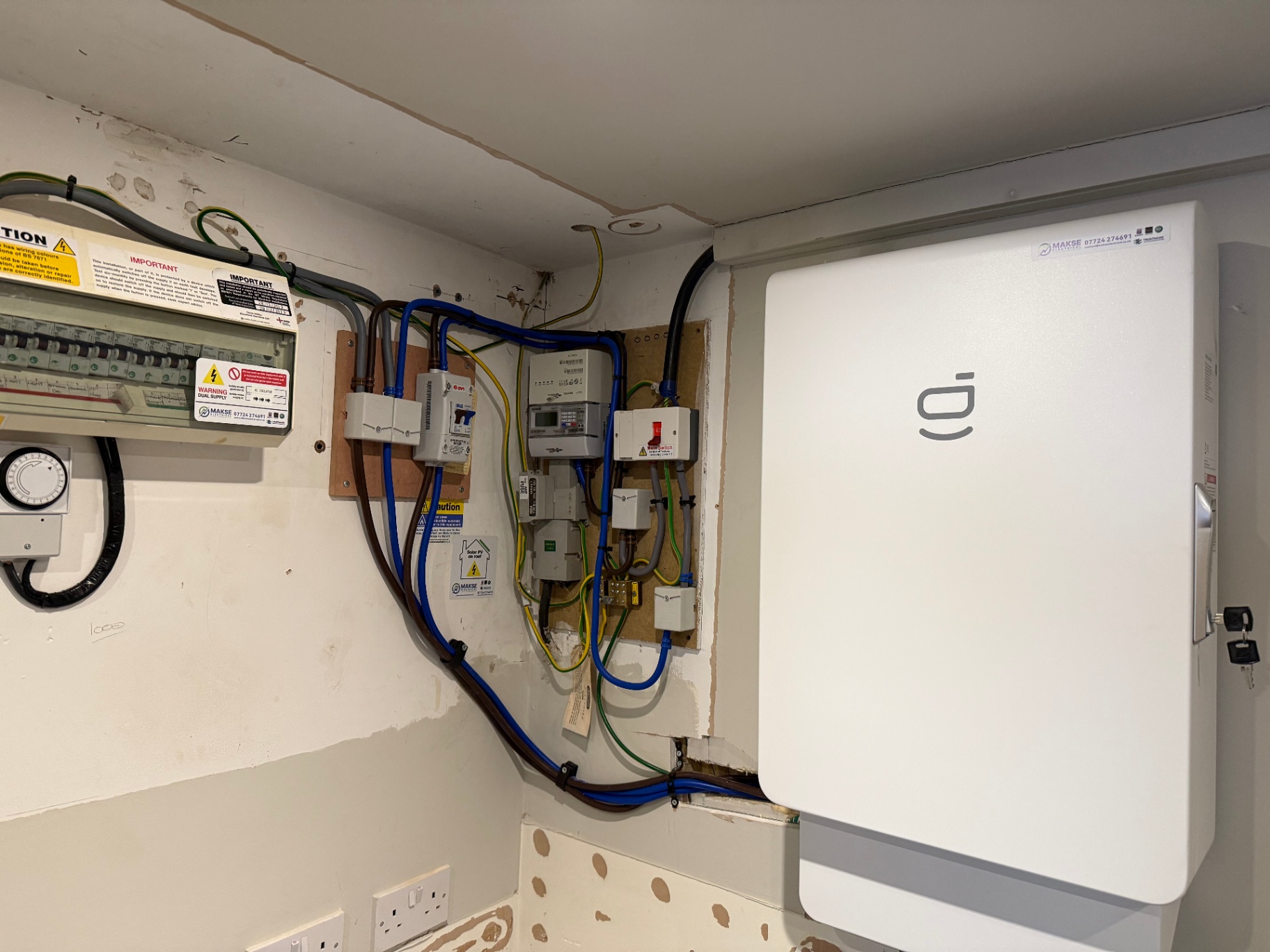
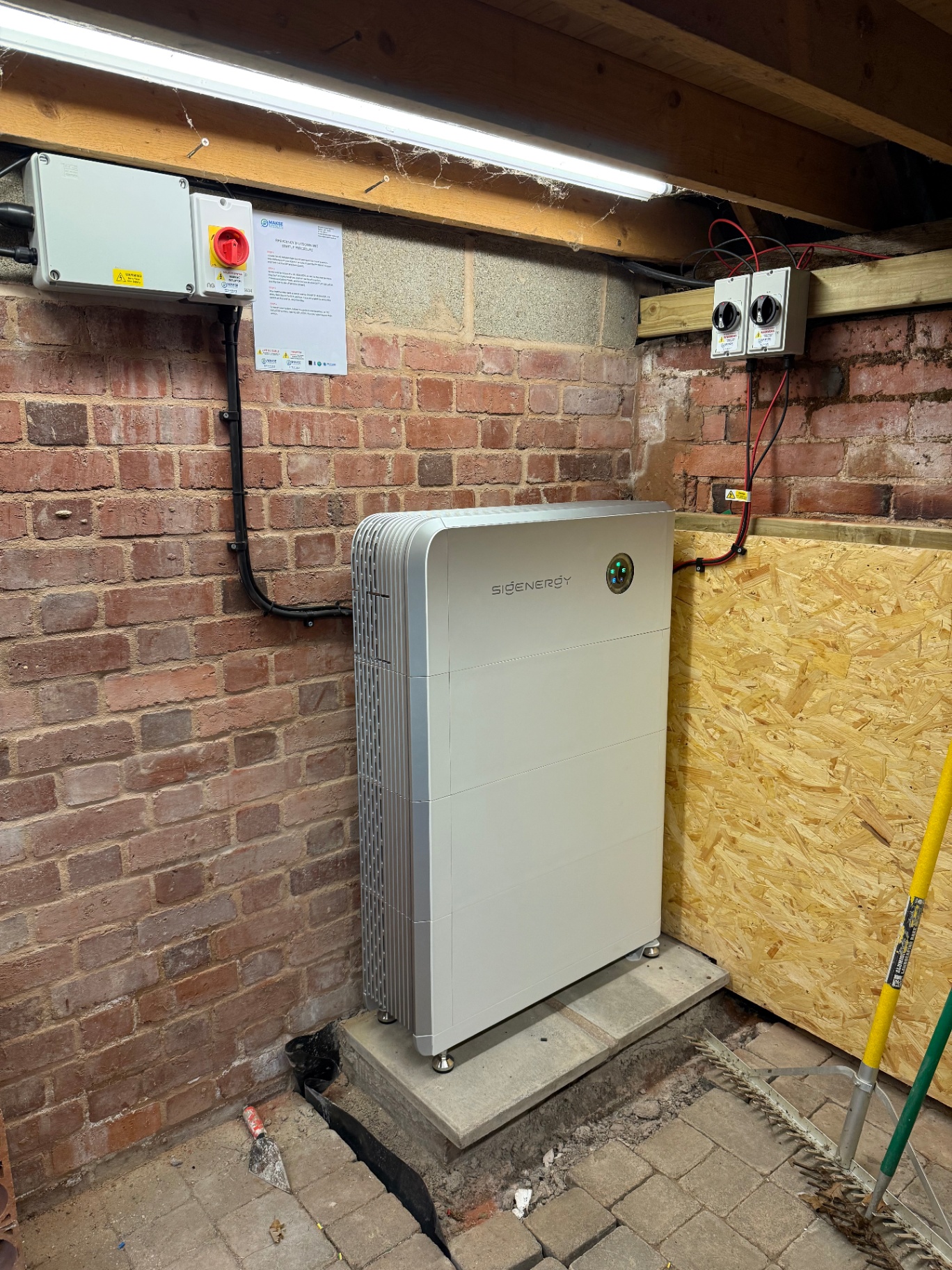
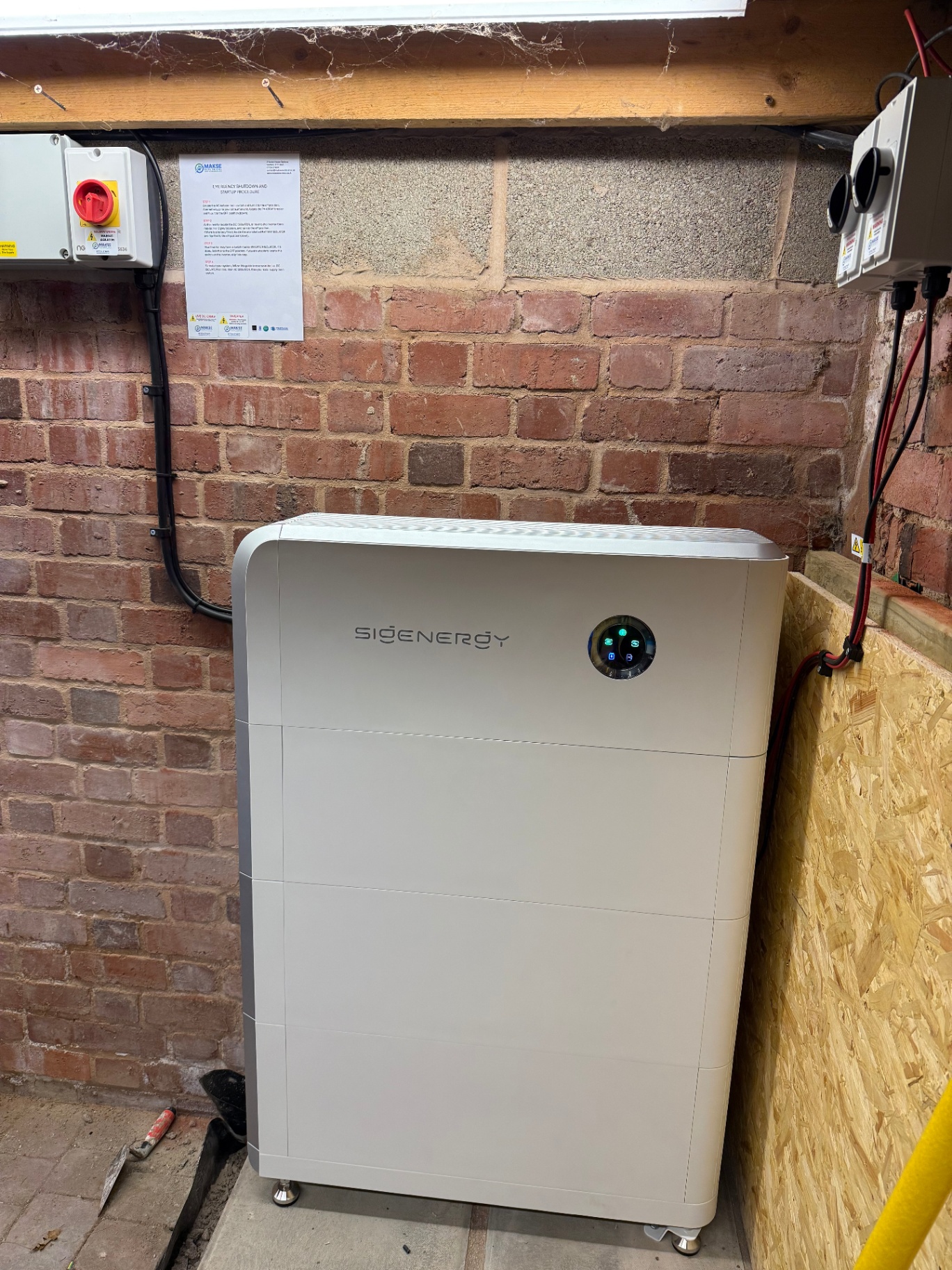
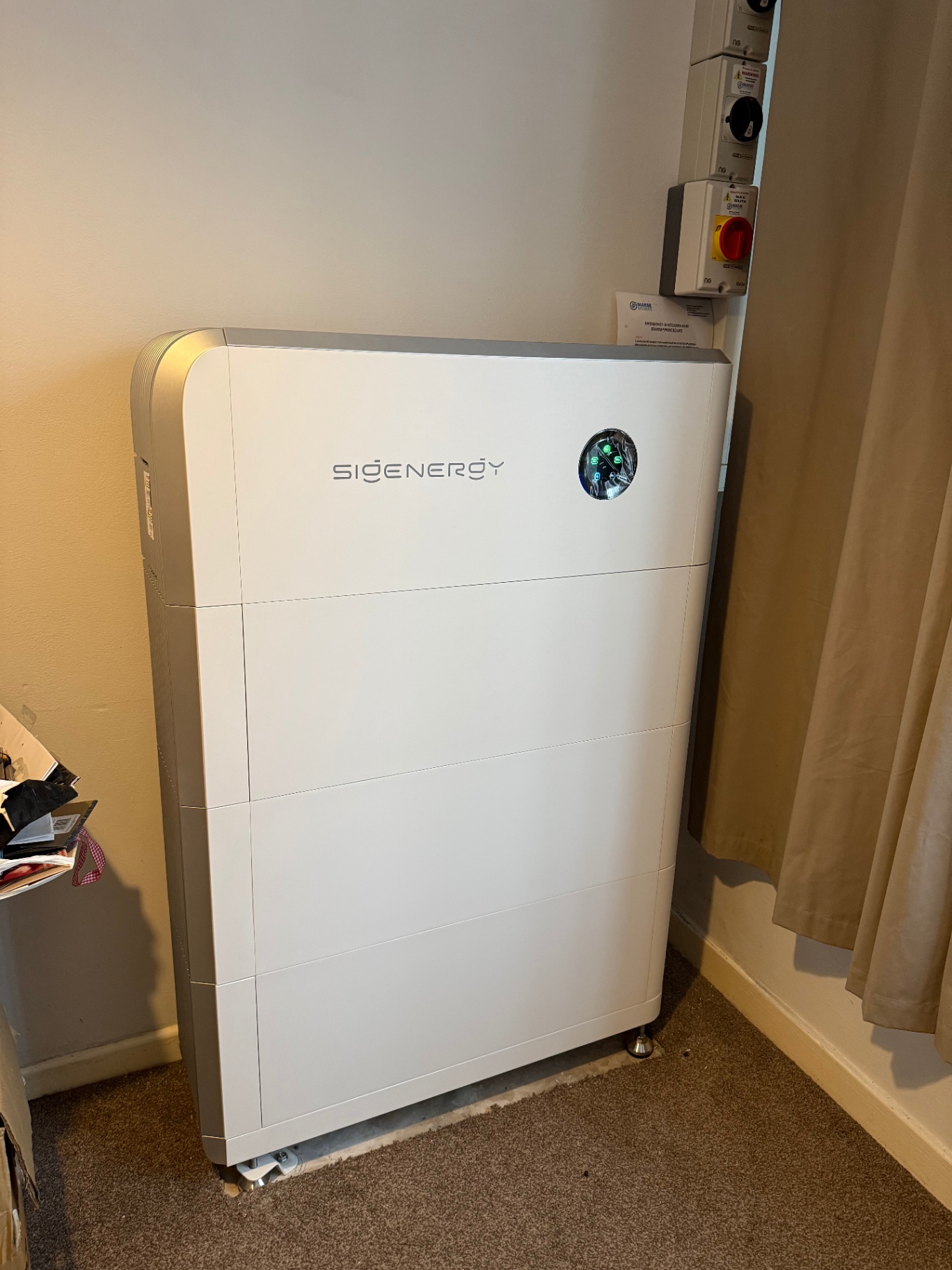
What battery storage involves — and why it matters.
A home battery stores excess solar generation or cheap off-peak grid electricity and releases it when you need it — typically evenings, overnight and through the winter mornings when solar isn't producing. Modern lithium iron phosphate (LFP) batteries offer 6,000–10,000 cycles of usable life with 10-year manufacturer warranties.
Solar owners frustrated that they still buy peak-rate electricity every evening. Homeowners on time-of-use tariffs (Octopus Go, Cosy, Intelligent Octopus) who want to charge cheaply overnight. Anyone considering an EV or heat pump who wants to smooth the load on their existing supply.
Immediately, if you already have solar and are exporting most of your generation at 5–15p/kWh only to buy it back at 25–30p/kWh in the evening. Or as part of a new solar install where fitting the battery on day one is materially cheaper than retrofitting later.
The economics have changed. Battery hardware costs have fallen ~50% in five years while grid electricity has risen. With the right time-of-use tariff, a battery can pay for itself on off-peak arbitrage alone — before you even count solar self-consumption gains.
What goes wrong when this isn't done properly.
Solar exporting at pennies per kWh
Without a battery, most of your summer solar goes to the grid at low SEG rates. Come evening you buy it back at 3–4× the price. The gap is money you're leaving on the table every day.
Retrofits done badly
Poorly retrofitted batteries end up on the wrong side of the inverter, can't be prioritised over grid export, or aren't compatible with tariff-driven charging. Undoing this later is expensive.
Under-sized batteries
A 3kWh battery next to a 6kW peak solar system is a token gesture. Sizing must be driven by consumption, not by whatever fits in the installer's van.
No backup functionality when it was promised
Not every battery/inverter combination supports EPS (Emergency Power Supply). If keeping the lights on during outages matters to you, the system has to be specced for it from day one.
Our process.
- 1
Consumption + tariff review
We look at your last 12 months of usage and evening/overnight pattern, and evaluate the best time-of-use tariff for your household.
- 2
Sizing and product selection
Battery capacity, coupling type (AC vs DC), backup capability and inverter compatibility are all decided at this stage.
- 3
Fixed written quote
Delivered within 2 working days. Kit, install, commissioning, G99 paperwork and HIES cover all included.
- 4
DNO / G99 approval
Adding a battery changes your site's export/import capability — a fresh application is usually needed and we handle it.
- 5
Installation and integration
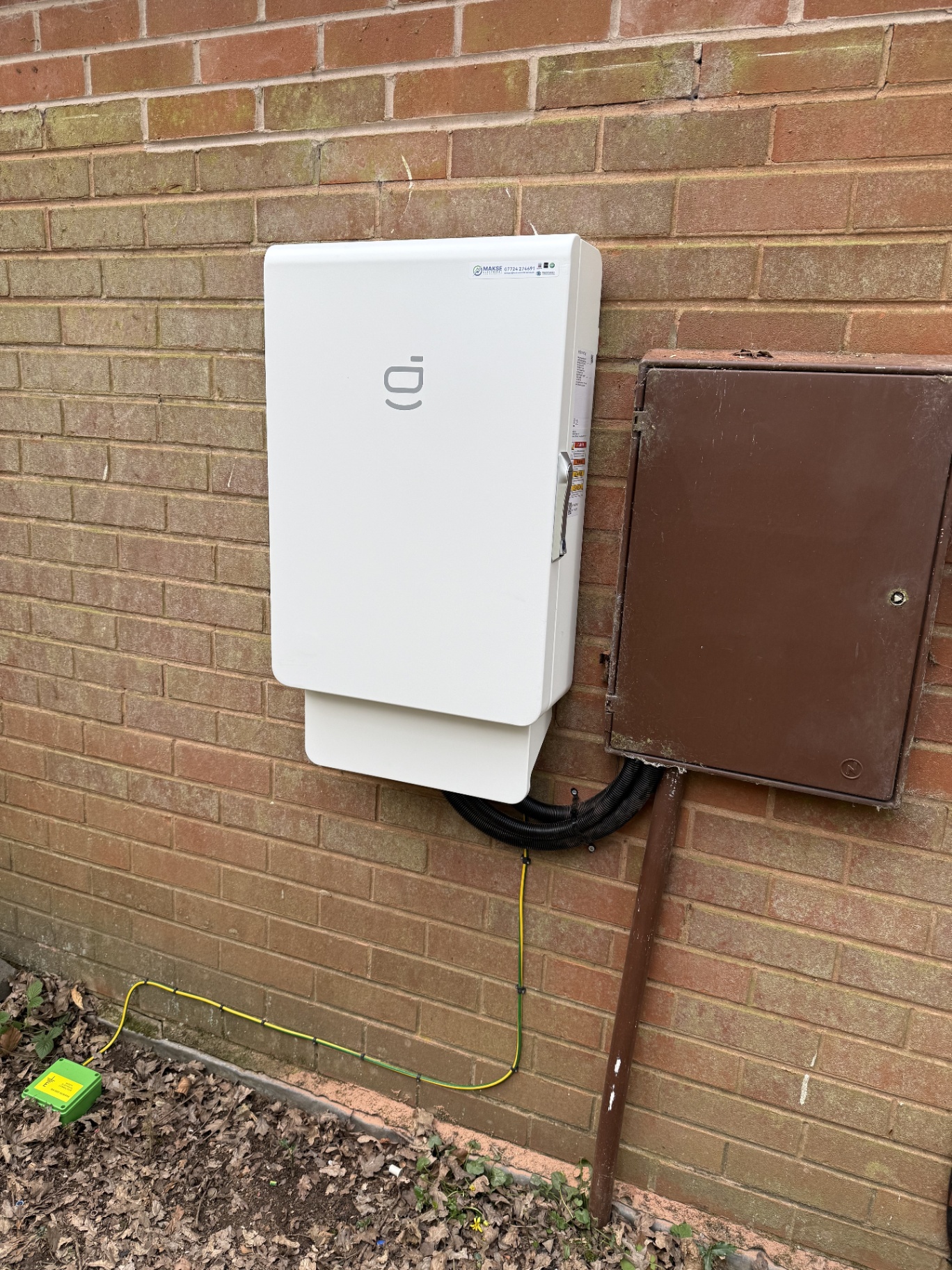
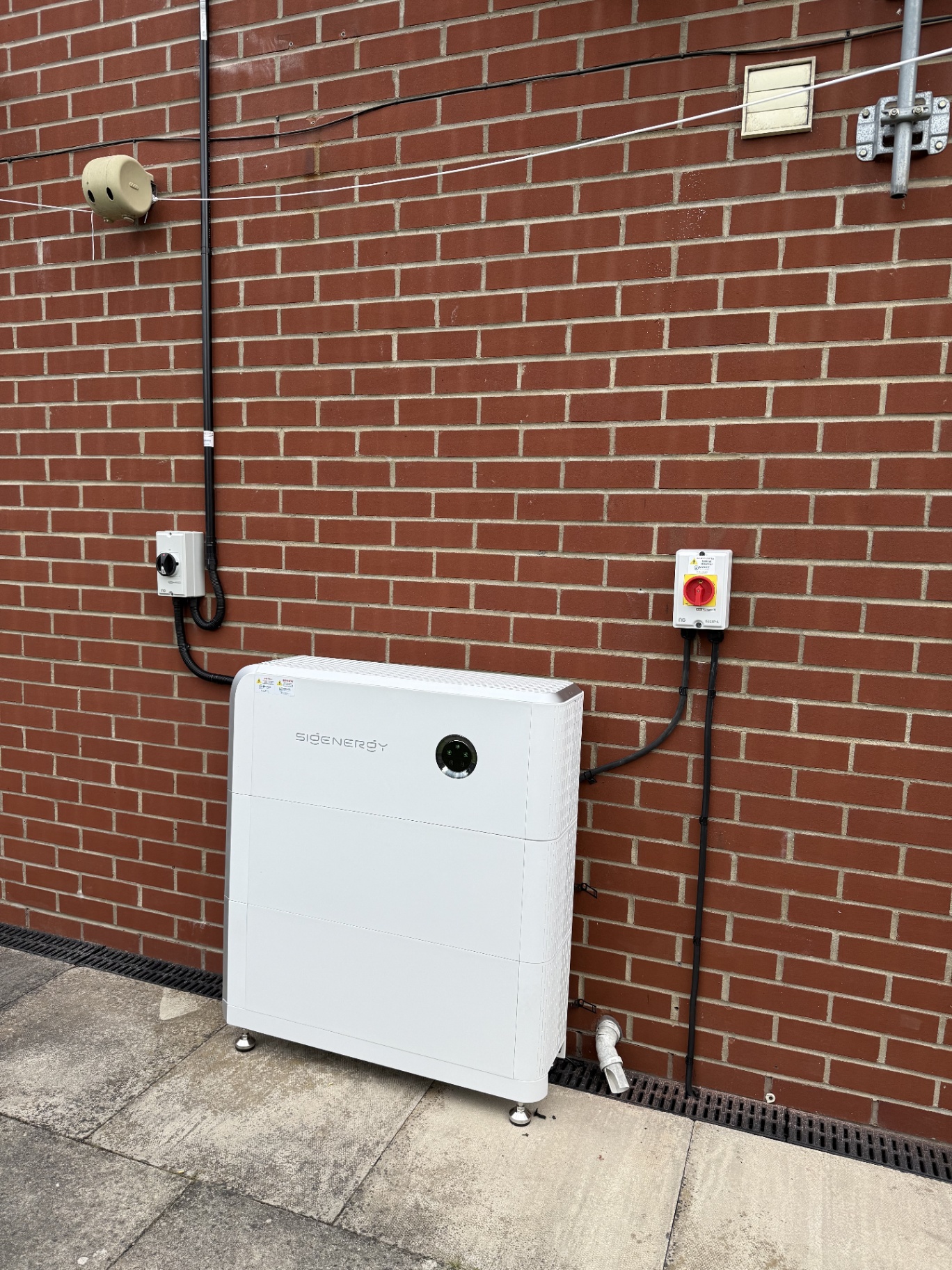
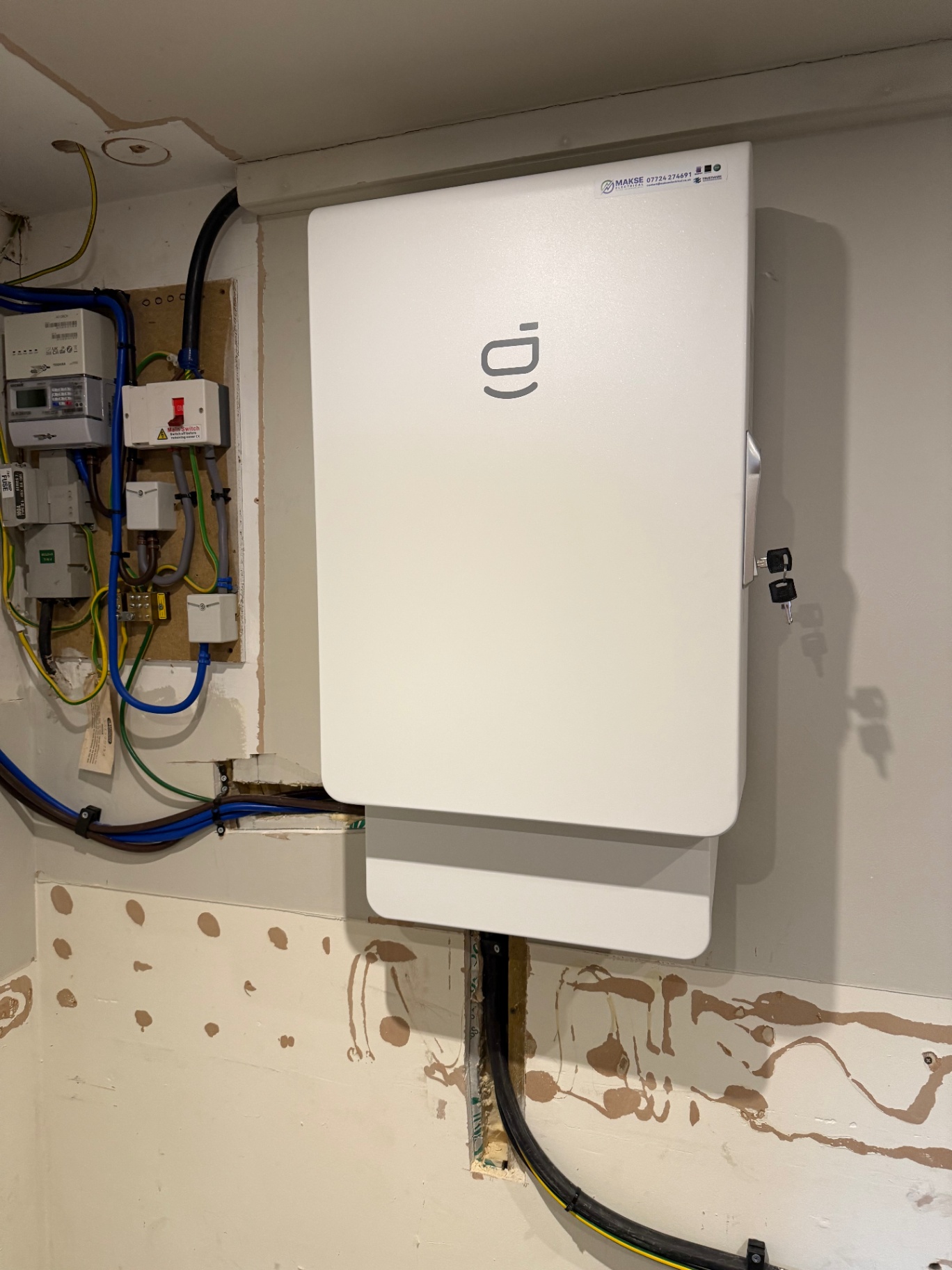
Typically a single day for a retrofit. Cables routed neatly, isolators fitted to spec, monitoring app configured with your tariff.
- 6
Commissioning, handover and tariff switch
We test the charge/discharge cycles, walk you through the app, and coordinate the switch to your new tariff if applicable.
The benefits, in concrete terms.
Peak-rate avoidance
Every evening kWh drawn from your battery instead of the grid saves 15–25p depending on tariff. Over a year, that's hundreds of pounds.
Off-peak arbitrage
Charge overnight at 7–10p, use it during the day at 25–30p. The system works even without solar.
Solar self-consumption up to 80%+
Combined with correctly sized solar, most homes we install for use the majority of their own generation on-site.
Backup power on supported systems
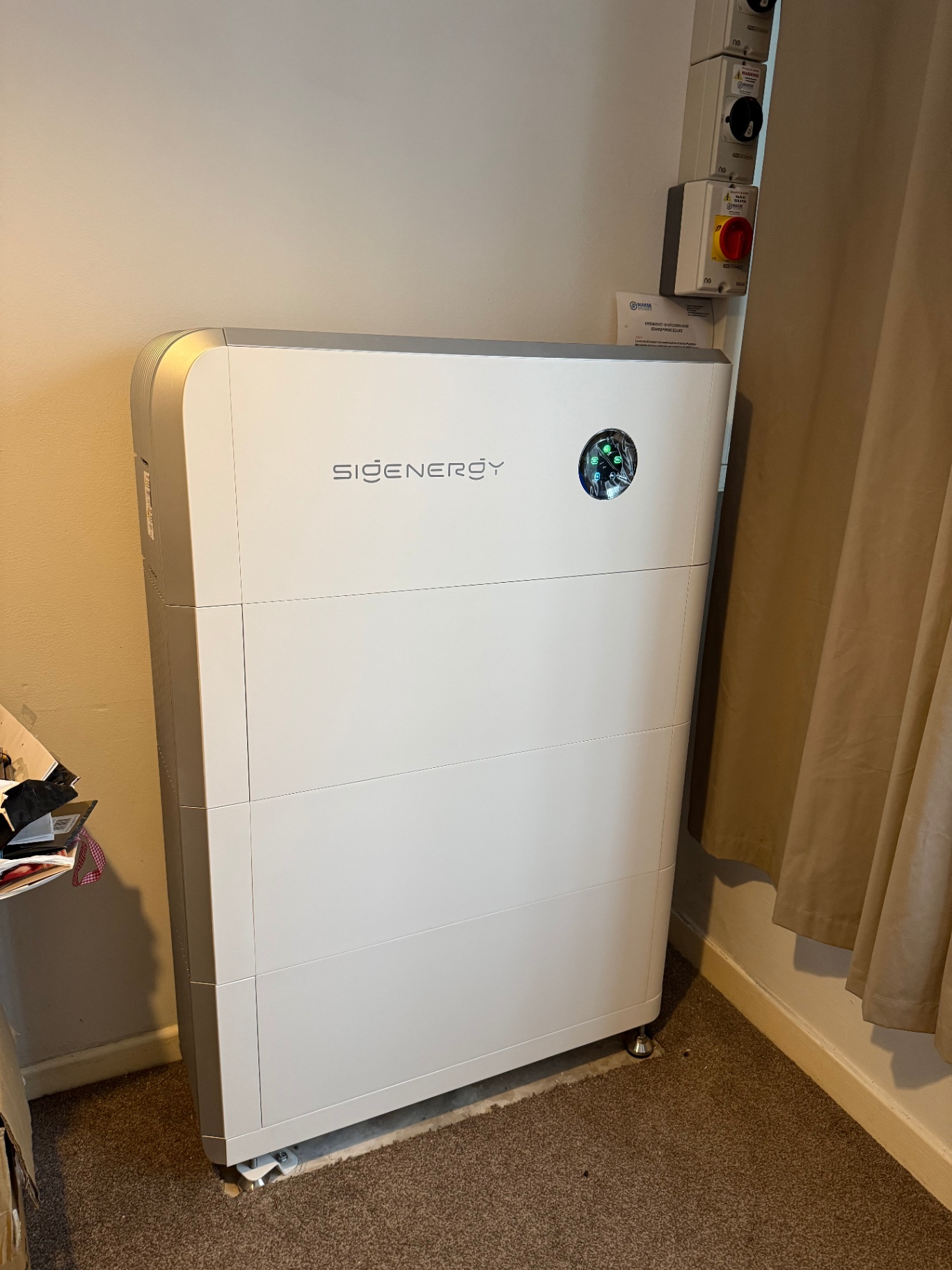
Sigenergy and select Fox ESS units keep essential circuits live during a grid outage.
10-year manufacturer warranty
Standard across the batteries we fit. LFP chemistry gives predictable long-cycle life.
Cleanly integrated with your existing solar
Retrofits are done properly — AC- or DC-coupled based on your existing inverter, with priority logic set for solar over grid.
The detail behind the work.
AC-coupled vs DC-coupled retrofits
DC-coupled batteries share the solar inverter and are more efficient (fewer conversions), but require a compatible hybrid inverter — often meaning inverter replacement on older systems. AC-coupled batteries have their own inverter and can be added to almost any existing solar system with minimal disruption. We assess both routes for retrofits and recommend the option with the shortest payback for your specific setup.
Batteries we install
Sigenergy SigenStor (modular, 5–48kWh, full backup capability), Tesla Powerwall 3 (13.5kWh, integrated inverter, whole-home backup), Fox ESS ECS series (modular, cost-effective, retrofit-friendly), Hanchu ESS (excellent price-per-kWh for larger installs). Selection is driven by capacity requirement, backup need, existing inverter, and available install space.
Sizing methodology
We size for evening/overnight consumption rather than daily total. For a household using 12 kWh/day of which 6 kWh falls in the 4pm–7am window, an 8–10 kWh usable battery gives near-total peak-rate avoidance. Oversizing beyond that only pays back if you're aggressively arbitraging cheap off-peak against expensive peak rates.
Tariff strategy
Octopus Go, Intelligent Octopus Go, Cosy Octopus and equivalent tariffs from other suppliers offer 4–7 hour cheap-rate windows overnight. The battery charges during that window and discharges through the day. We configure the inverter's schedule at handover and revisit it if you change tariff.
G99 paperwork
Adding storage counts as a change to your grid connection. We submit the G99 application on your behalf and wait for approval before commissioning, which is a legal requirement.
Longevity and cycle life
Modern LFP cells are rated for 6,000–10,000 cycles at 80% depth of discharge. In real terms that's 15–25 years of daily cycling — well beyond the 10-year warranty period. Chemistry has fundamentally changed the durability equation vs older NMC cells.
Frequently asked questions.
Can I add a battery to my existing solar system?+
In most cases yes. We do retrofits regularly — either AC-coupled (battery has its own inverter, works with any existing solar) or DC-coupled (replaces the existing inverter with a hybrid). We recommend the option with the shortest payback for your specific setup.
How big a battery do I need?+
It's driven by your evening/overnight consumption pattern and whether you want to arbitrage off-peak tariffs. Most Staffordshire households we install for land between 8 and 20 kWh of usable capacity.
Will a battery keep the lights on during a power cut?+
Only if the battery and inverter combination supports EPS (Emergency Power Supply). Sigenergy and Tesla Powerwall 3 do; some cheaper systems don't. Spec this on day one if it matters to you.
How long do batteries last?+
LFP batteries are rated 6,000–10,000 cycles at 80% depth of discharge — comfortably 15–25 years of daily use. Manufacturer warranties are typically 10 years.
What's the payback period on a battery?+
Typically 6–10 years on off-peak arbitrage alone, faster when combined with correctly sized solar and a suitable tariff. Every quote we send includes a payback estimate based on your actual consumption.
Which tariff should I be on?+
Octopus Go and Intelligent Octopus Go are the current sweet spot for most battery households, with 5–6 hour overnight windows at ~7p/kWh. We advise on the current best-in-class at handover.
Can I add more batteries later?+
Modular systems (Sigenergy, Fox ESS) let you add capacity later. Non-modular systems (Powerwall) require another full unit. We flag this in the quote.
Do I need a new consumer unit?+
Often no — but if your existing board is old or fully loaded, we'll flag it at survey stage and include any changes in the quote.
Related services
MCS-certified solar PV for UK homes.
We fix and rectify other installers' faulty work.
From £650. Safe, modern boards installed cleanly.
OZEV-approved, Tesla, myenergi, Hypervolt accredited.
See our full service overview, browse service areas we cover, or head to the contact page to book a survey.
Ready for a straight-talking quote on battery storage?
MCS · NAPIT · HIES · OZEV · Part P · 18th Edition · 5.0 ★ on Google (24+ reviews)