
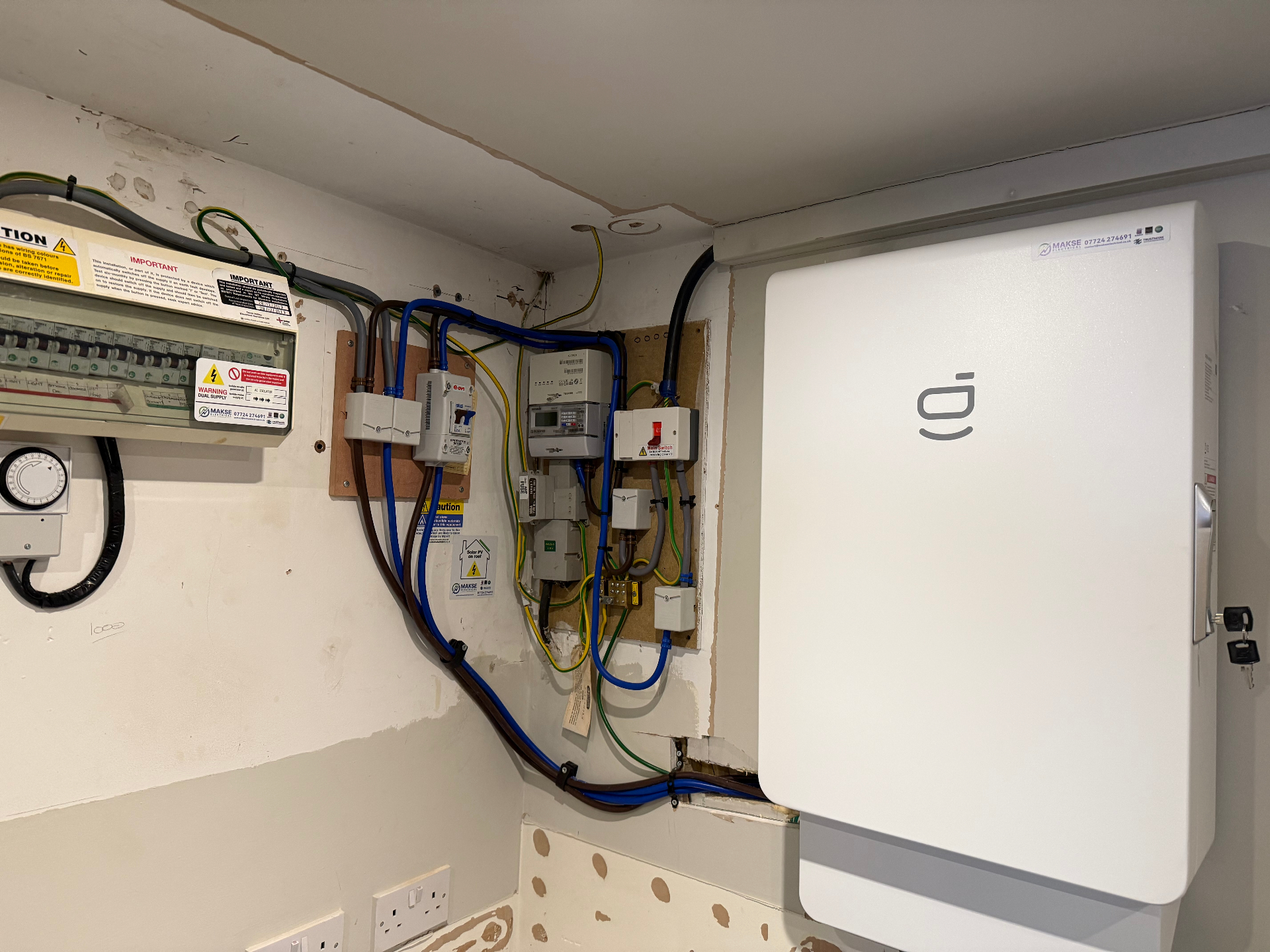
Consumer Unit / Fuse Board Replacementin Staffordshire &the Midlands.
Old plastic fuseboard? Rewireable fuses? Wylex or MK from the 80s? We replace it with a modern, metal-clad, RCBO-protected board — installed cleanly in a day, tested and certified.
What consumer unit / fuse board replacement involves — and why it matters.
Replacement of your existing consumer unit (fuseboard) with a modern 18th Edition compliant, metal-clad, RCBO-protected board. Includes full circuit testing after the swap and issue of an Electrical Installation Certificate — the formal document you or your solicitor will want to see.
Homeowners with plastic-cased boards from before ~2016, anyone with rewireable fuses or a first-generation split-load RCD board, buyers whose survey has flagged the consumer unit, and landlords addressing EICR remedials.
As soon as an EICR has coded C2 (potentially dangerous — usually missing RCD protection), before selling or renting where the unit is an obvious deterrent, or as part of a rewire or major electrical works.
The consumer unit is the single most important safety device in your home. Modern boards individually protect every circuit with an RCBO (combined RCD and MCB) rather than sharing one RCD across half the house — meaning a fault on one circuit no longer knocks out the other five. Metal enclosures contain fires within the board itself. Both are current regulatory expectations.
What goes wrong when this isn't done properly.
One fault knocks out half the house
Older split-load boards share a single RCD across multiple circuits. A fault on the freezer trips the sockets too — including the freezer that failed. RCBOs isolate faults to the individual circuit.
Plastic enclosures
Consumer units are the most fire-loaded part of a domestic installation. Plastic cases can propagate the fire; metal cases contain it. The 17th Edition amendment made metal enclosures effectively mandatory for domestic boards.
Rewireable fuses (BS 3036)
Rewireable fuses give minimal protection, cannot detect earth faults, and are trivially defeated by fitting too-thick wire. Any home still running these needs an urgent upgrade.
No spare ways for future circuits
Old 6-way boards are full. Adding an EV charger, a solar system or an electric shower needs spare ways — planning this at consumer unit stage saves a second changeover later.
Our process.
- 1
Survey and quote
Existing board photographed, circuits identified, future requirements discussed (EV, solar, extension). Written fixed quote issued.
- 2
Confirmed appointment
Whole-house power off is typically 4–6 hours. We schedule around your household — freezers, work from home, medical equipment.
- 3
Isolation and removal
Main isolator off (or tails pulled with the supplier's permission for older setups). Existing board removed, cables identified and labelled.
- 4
New board installation
Metal-clad 18th Edition board with individual RCBOs per circuit. Neat terminations. Main earth and MET bonding checked and upgraded if needed.
- 5
Full circuit testing
Continuity, insulation resistance, polarity, earth fault loop impedance, RCBO trip times — every circuit, every test.
- 6
Certification and NAPIT notification
Electrical Installation Certificate issued. Notifiable work registered with Building Control via NAPIT — you receive a compliance certificate in the post.
The benefits, in concrete terms.
Individual RCBO per circuit
A fault on one circuit no longer knocks out unrelated circuits. Faster fault diagnosis, less household disruption.
Metal-clad enclosure
Contains any internal fire, meets current 18th Edition Amendment 2 requirements, and looks materially better than an old plastic box.
Spare ways for future work
We size the new board with 25–50% spare capacity where the space allows — ready for EV, solar or an extension.
Full circuit certification
Every circuit is tested and certified. You get the paperwork solicitors, insurers and future EICRs will want to see.
Part P notified
Registered with Building Control through NAPIT — compliance certificate arrives by post, no self-declaration needed.
Clean, one-day install
Most changeovers are completed inside a working day. Power restored circuit-by-circuit as testing completes so refrigeration is barely disturbed.
Consumer unit changes from £650.
Every job is quoted in writing before any work starts. No surprises, no time-and-materials creep.
The detail behind the work.
What a modern board looks like
Metal enclosure with hinged front cover. Main switch (100A double-pole) on the left. Individual RCBOs — one per circuit — providing combined overcurrent and earth-fault protection. Type-A RCBOs as standard, Type-B where EV or induction hob loads demand it. Surge protection device (SPD) fitted where the property is exposed or as required by regulation.
RCBOs vs old split-load RCD boards
Split-load boards from the 2008–2016 era grouped multiple circuits under one shared RCD. A fault on any of them tripped the whole group. All-RCBO boards give each circuit its own RCD, meaning fault isolation is one circuit deep. This is the current standard for good reason.
Main earth and MET bonding
During a consumer unit change we check the main earthing conductor cross-sectional area against the current DNO requirement (typically 16mm² for a TN-C-S supply) and upgrade if undersized. Main equipotential bonding to gas and water is also verified and upgraded if the existing bonding is undersized or missing.
Surge protection
SPDs protect against transient overvoltages from lightning strikes and grid switching events. Fitted as standard on Type 2 SPDs in most of our new boards, protecting sensitive electronics (TVs, computers, boiler controls, EV chargers) across the whole installation.
Notifiable work and NAPIT registration
Consumer unit replacement is Part P notifiable — it must be registered with local Building Control. We're NAPIT-registered, so we self-certify and register the work electronically. You receive a compliance certificate by post within a few weeks.
Common Staffordshire property types
1930s semis: 6-way or 8-way boards, often relocated to garages or halls. 1960s–80s stock: original Wylex rewireable-fuse boards common, upgrade priority. 1990s–2000s: first-generation split-load MCB boards — functional but non-current. New-builds: usually already all-RCBO metal boards, no work needed.
Frequently asked questions.
How much does a consumer unit change cost?+
Consumer unit replacements start from £650 for a straightforward like-for-like upgrade. Larger boards, main earth upgrades, or supplementary bonding work is priced from survey. We quote fixed prices up-front.
How long does it take?+
Most changeovers are completed inside a working day. Power is off during the swap and restored circuit-by-circuit as testing completes.
Do you notify Building Control?+
Yes — we're Part P certified through NAPIT and notifiable work is registered on your behalf. You receive a compliance certificate by post within a few weeks of the job.
Will I get a certificate?+
Yes — an Electrical Installation Certificate covering the new board and every circuit tested. Kept for your records, and provided to solicitors on sale of the property.
Do I need a new consumer unit to have an EV charger installed?+
Not always — but if your board is at capacity, non-RCD-protected, or plastic-cased, we'll recommend a change at the same time. Doing both together is materially cheaper than in two visits.
What if my house needs re-earthing?+
We identify undersized main earthing at the survey stage and include any upgrade in the quote. Where the DNO needs to provide a new supply earth we coordinate this with them.
Is the whole house without power all day?+
Power is off during the physical changeover — typically 4–6 hours. Individual circuits come back on as they're tested, so essentials like fridges and freezers are barely disturbed.
My EICR flagged the board as C3 — do I need to change it?+
C3 means improvement recommended, not required. You can plan the change on your own timeline. C2 findings do need addressing — usually within 28 days for rented properties.
Related services
From £250. Full Electrical Installation Condition Reports.
Full and partial rewires with certification.
OZEV-approved, Tesla, myenergi, Hypervolt accredited.
Methodical diagnosis — no guesswork.
See our full service overview, browse service areas we cover, or head to the contact page to book a survey.
Ready for a straight-talking quote on consumer unit / fuse board replacement?
MCS · NAPIT · HIES · OZEV · Part P · 18th Edition · 5.0 ★ on Google (24+ reviews)